Saltar al contenido principal

¿Qué quieres ver esta noche?

Cada título dice para quién es bueno y para quién no. Toca lo que quieres esta noche, o di que no a uno y por qué.

Lo más cercano a À propos de Nice primero

  1. Land Without Bread 1933

    Documentary

    An exploration —manipulated and staged— of life in Las Hurdes, in the province of Cáceres, in Extremadura, Spain, as it was in 1932. Insalubrity, misery and lack of opportunities provoke the emigration of young people and the solitude of those who remain in the desolation of one of the poorest and least developed Spanish regions at that time.

    The sides of Land Without Bread

    • Villages of Las Hurdes in 1932
    • Luis Buñuel behind the camera
    • Poverty filmed with a cold narrator

    Good for you if

    • you like Buñuel turning a documentary into something strange.
    • you can take a film about misery with no comfort offered.
    • you want to see rural Spain before the civil war.

    Bad for you if

    • you can't watch sick children and animals dying on screen.
    • you can't take a narrator's dry irony over real people's suffering.
    • you find films from the 1930s dated.

    About: poverty · isolation · the gaze of outsiders

    Explora sus caras
  2. Man with a Movie Camera 1929

    Documentary

    A cameraman wanders around with a camera slung over his shoulder, documenting urban life with dazzling inventiveness.

    The sides of Man with a Movie Camera

    • A cameraman filming Soviet cities in the 1920s
    • A day of city life from waking to work to play
    • Split screens, slow motion and fast cuts

    Good for you if

    • you like seeing camera tricks invented before your grandparents were born.
    • you like silent black and white film.
    • you like the thrill of trams, factories and crowds cut to a rhythm.

    Bad for you if

    • you need a story and people to follow. There is no plot and no actor.
    • you need words. It is silent, with no intertitles.

    About: the city · modernity · cinema itself

    Explora sus caras
  3. Titicut Follies 1967

    Documentary

    Employing methods of direct cinema–observation, limited stylization, and non-intervention–this stark look into the State Prison for the Criminally Insane in Bridgewater, Massachusetts shows its denizens, who were often kept in barren cells and infrequently bathed, forced to strip naked publicly, force feeding, and the indifference and bullying by many of the hospital's staff.

    The sides of Titicut Follies

    • Bridgewater State Hospital in 1967
    • Patients and guards with no narration
    • A variety show put on by staff and inmates

    Good for you if

    • you want to see a real prison hospital with no narrator telling you what to think.
    • you like raw black and white footage from the 1960s.
    • you want to see what total power over patients looks like.

    Bad for you if

    • you can't watch patients stripped, mocked and force fed.
    • you need some hope by the end.

    About: confinement · dignity · cruelty

    Explora sus caras
  4. A day in the city of Berlin, which experienced an industrial boom in the 1920s, and still provides an insight into the living and working conditions at that time. Germany had just recovered a little from the worst consequences of the First World War, the great economic crisis was still a few years away and Hitler was not yet an issue at the time.

    The sides of Berlin: Symphony of a Great City

    • One day in Berlin, from dawn to night
    • Trains, factories and crowded streets
    • Silent black and white images cut to a rhythm

    Good for you if

    • you like a city filmed like a machine, frame after frame.
    • you want to see Berlin as it really looked in 1927.
    • you want a silent film that's over in under seventy minutes.

    Bad for you if

    • you find silent black and white films dated.
    • you need people and a story to follow.

    About: the city · modern life · work
    Explora sus caras
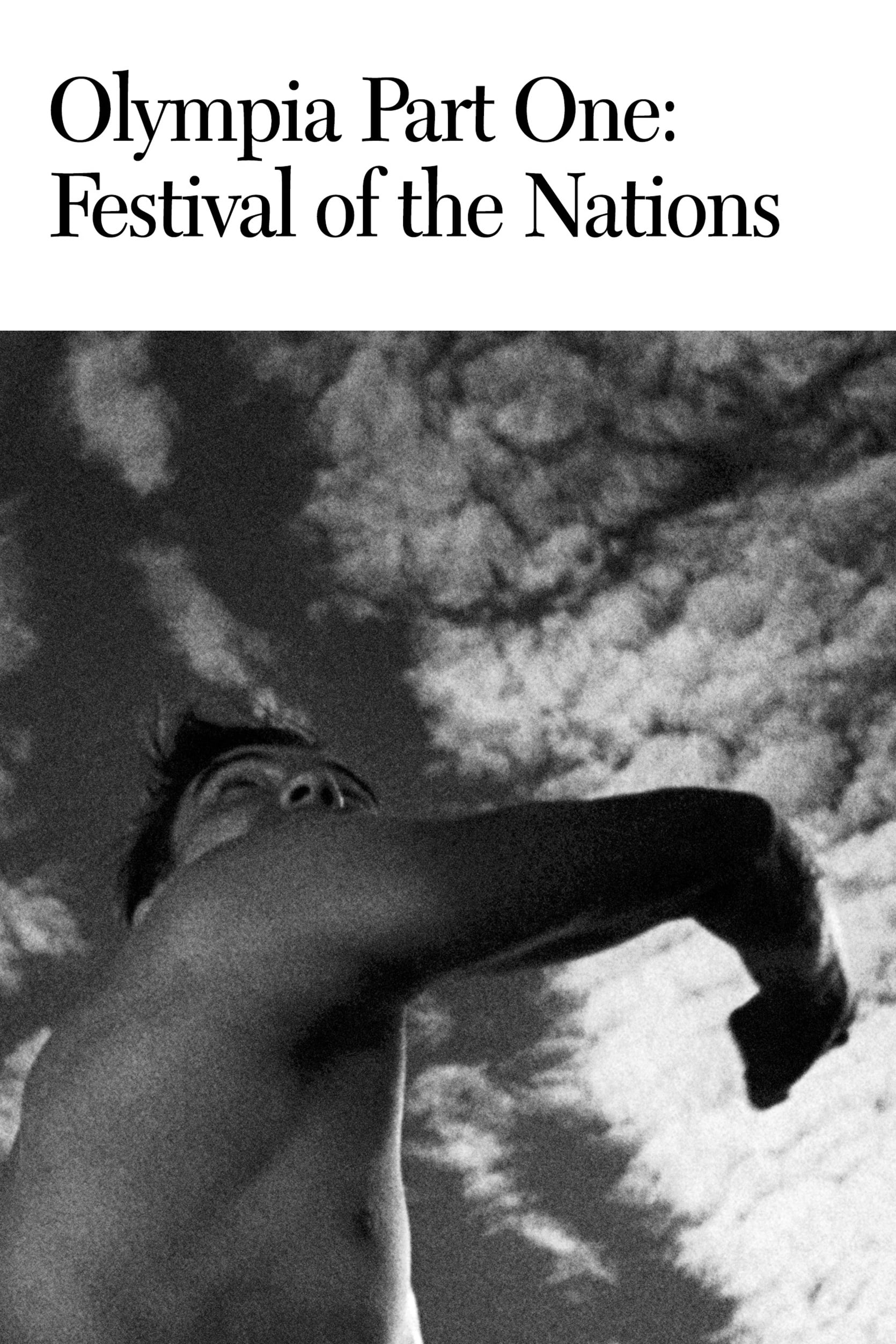
  5. Starting with a long and lyrical overture, evoking the origins of the Olympic Games in ancient Greece, Riefenstahl covers twenty-one athletic events in the first half of this two-part love letter to the human body and spirit, culminating with the marathon, where Jesse Owens became the first track and field athlete to win four gold medals in a single Olympics.

    The sides of Olympia Part One: Festival of the Nations

    • The 1936 Berlin Olympics
    • Jesse Owens winning four gold medals
    • A film made for the Nazi regime

    Good for you if

    • you like Leni Riefenstahl's camera angles that shaped how sport is filmed.
    • you like watching athletes in motion, event after event.
    • you want to see how the Nazi regime staged the 1936 Games.

    Bad for you if

    • you find black and white films from the 1930s dated.
    • you won't read subtitles for German narration.

    About: propaganda · the body · competition
    Explora sus caras
  6. Salesman 1969

    Documentary

    This documentary from Albert and David Maysles follows the bitter rivalry of four door-to-door salesmen working for the Mid-American Bible Company: Paul "The Badger" Brennan, Charles "The Gipper" McDevitt, James "The Rabbit" Baker and Raymond "The Bull" Martos. Times are tough for this hard-living quartet, who spend their days traveling through small-town America, trying their best to peddle gold-leaf Bibles to an apathetic crowd of lower-middle-class housewives and elderly couples.

    The sides of Salesman

    • Four Bible salesmen on the road
    • Sales pitches in working-class living rooms
    • Motel rooms between visits

    Good for you if

    • you like watching real door-to-door salesmen at work in 1960s America.
    • you like following Paul Brennan as his pitch stops working.
    • you enjoy black and white documentaries from the sixties.

    Bad for you if

    • you need more happening than sales pitches in living rooms.
    • you need music to carry a film. There's no score and no narrator, just the salesmen talking.

    About: work · failure · the American dream

    Explora sus caras
  7. Sans Soleil 1983

    Documentary

    A woman narrates the thoughts of a world traveler, meditations on time and memory expressed in words and images from places as far-flung as Japan, Guinea-Bissau, Iceland, and San Francisco.

    The sides of Sans Soleil

    • Letters from an unseen traveller read aloud
    • Tokyo streets, Guinea-Bissau and Iceland
    • A meditation on time and memory

    Good for you if

    • you like a film that raises questions about memory and leaves them open.
    • you like images of everyday life in faraway places.
    • you like letting a narrator's thoughts drift over the pictures.

    Bad for you if

    • you find grainy 1980s footage dated.
    • you need a story with characters, not an essay.

    About: memory · time · travel · images

    Explora sus caras
  8. Harlan County U.S.A. 1976

    Documentary

    A heartbreaking record of the thirteen-month struggle between a community fighting to survive and a corporation dedicated to the bottom line.

    The sides of Harlan County U.S.A.

    • Coal miners on strike in Kentucky
    • Wives and mothers on the picket line
    • Armed strikebreakers at dawn

    Good for you if

    • you want to stand on a real picket line for thirteen months.
    • you like seeing a mining town take on a corporation.
    • you like the union songs that run through it.

    Bad for you if

    • you find 1970s footage dated.
    • you can't watch a community living with guns on the picket line and miners sick with black lung.

    About: labour · solidarity · class

    Explora sus caras
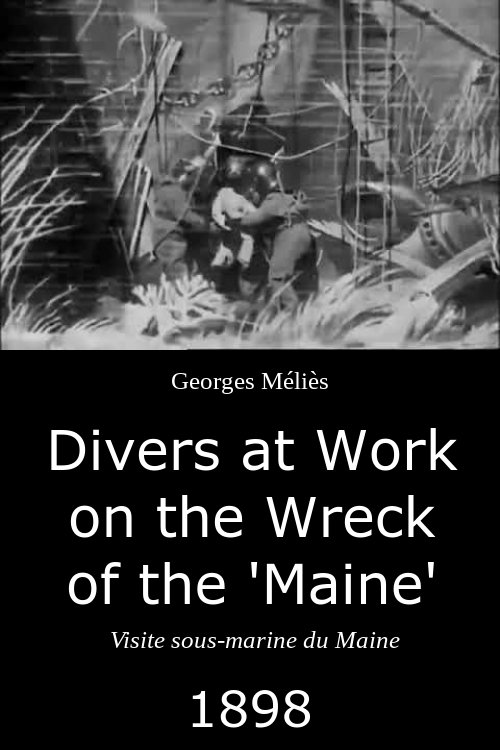
  9. Divers go to work on a wrecked ship (the battleship Maine that was blown up in Havana harbour during the Spanish-American War), surrounded by curiously disproportionate fish.

    The sides of Divers at Work on the Wreck of the "Maine"

    • Divers on a sunken battleship
    • Fish swimming past, oddly large
    • An 1898 underwater scene made in a studio

    Good for you if

    • you love the very first films, silent and from the 1890s.
    • you like odd little curiosities, like fish far too big next to the divers.
    • you're curious how cinema showed the news of the Maine in 1898.

    Bad for you if

    • you want a full evening, and this lasts about a minute.
    • you need people with a story to follow.

    About: early cinema · the sea · the news

    Explora sus caras
  10. Nanook of the North 1922

    Documentary

    This pioneering documentary film depicts the lives of the indigenous Inuit people of Canada's northern Quebec region. Although the production contains some fictional elements, it vividly shows how its resourceful subjects survive in such a harsh climate, revealing how they construct their igloo homes and find food by hunting and fishing. The film also captures the beautiful, if unforgiving, frozen landscape of the Great White North, far removed from conventional civilization.

    The sides of Nanook of the North

    • An Inuit hunter and his family in northern Quebec
    • An igloo built by hand
    • A walrus hunt with harpoons

    Good for you if

    • you like the frozen landscapes of the far north.
    • you like watching people find food and shelter in deep cold.
    • you're curious about one of the very first documentaries.

    Bad for you if

    • you don't watch silent black and white films.
    • you need momentum. Whole minutes go to cutting snow blocks for an igloo.

    About: survival · family · the Arctic

    Explora sus caras
  11. Powaqqatsi 1988

    Documentary

    An exploration of technologically developing nations and the effect the transition to Western-style modernization has had on them.

    The sides of Powaqqatsi

    • Workers of the developing world in slow motion
    • A Philip Glass score
    • No words at all

    Good for you if

    • you like faces and crowds filmed in slow motion.
    • you like a Philip Glass score carrying a whole film.
    • you like feeling the scale of human labour across continents.

    Bad for you if

    • you need a story that moves forward.
    • you need the images explained, and no one says a word.

    About: labour · modernity · tradition

    Explora sus caras
  12. The Image Book 2018

    Documentary

    In Le Livre d’Image, Jean-Luc Godard recycles existing images (films, documentaries, paintings, television archives, etc.), quotes excerpts from books, uses fragments of music. The driving force is poetic rhyme, the association or opposition of ideas, the aesthetic spark through editing, the keystone. The author performs the work of a sculptor. The hand, for this, is essential. He praises it at the start. “There are the five fingers. The five senses. The five parts of the world (…). The true condition of man is to think with his hands. Jean-Luc Godard composes a dazzling syncopation of sequences, the surge of which evokes the violence of the flows of our contemporary screens, taken to a level of incandescence rarely achieved. Crowned at Cannes, the last Godard is a shock film, with twilight beauty.

    The sides of The Image Book

    • A collage of film clips, paintings and archives
    • Godard's voice over fragments of music and books
    • Five chapters about images and violence

    Good for you if

    • you like images cut, saturated and set against each other.
    • you're happy to be left with ideas rather than answers.
    • you enjoy working out why Godard puts two images side by side.

    Bad for you if

    • you need people and a story, and there are none here.
    • you won't read subtitles over dense French narration.
    • you can't stand archive footage of war and killing.

    About: cinema · violence · memory · the Arab world

    Explora sus caras
  13. La naranja mecánica 1971

    Película

    Gran Bretaña, en un futuro indeterminado. Alex es un joven muy agresivo que tiene dos pasiones: la violencia desaforada y Beethoven. Es el jefe de la banda de los drugos, que dan rienda suelta a sus instintos más salvajes apaleando, violando y aterrorizando a la población. Cuando esa escalada de terror llega hasta el asesinato, Alex es detenido y, en prisión, se someterá voluntariamente a una innovadora experiencia de reeducación que pretende anular drásticamente cualquier atisbo de conducta antisocial.

    Las caras de La naranja mecánica

    • Un joven matón que adora a Beethoven
    • Una cura que quita la elección
    • Bares de leche y una jerga extraña

    Buena para ti si

    • te gusta una película con un aspecto que nunca olvidarás.
    • te gusta el cine perturbador y provocador.
    • te gusta una sátira que te incomoda.

    Mala para ti si

    • la violencia presentada como entretenimiento es demasiado para ti.
    • la violencia sexual en pantalla es demasiado para ti.
    • las películas de 1971 te parecen raras y anticuadas.

    Temas: el libre albedrío · la violencia · la sociedad

    Explora sus caras
  14. Dictator Adenoid Hynkel tries to expand his empire while a poor Jewish barber tries to avoid persecution from Hynkel's regime.

    The sides of The Great Dictator

    • Chaplin as a dictator named Hynkel
    • A Jewish barber who looks just like him
    • A dance with a globe

    Good for you if

    • you like Chaplin's slapstick aimed at Hitler.
    • you can be moved by a final speech that speaks straight to the camera.
    • you like a film made in 1940, while the war it mocks was going on.

    Bad for you if

    • you find black and white films dated.
    • you'd rather not see a Jewish ghetto raided, even in a comedy.

    About: fascism · persecution · humanity

    Explora sus caras
  15. Naqoyqatsi 2002

    Documentary

    A visual montage portrait of our contemporary world dominated by globalized technology and violence.

    The sides of Naqoyqatsi

    • A wordless montage of a digital world
    • A Philip Glass score with Yo-Yo Ma's cello
    • Archive images reworked by computers

    Good for you if

    • you like letting images wash over you for an hour and a half.
    • you like a Philip Glass score carrying a whole film.
    • you like the third Qatsi film's strange computer-made imagery.

    Bad for you if

    • you need a story that moves forward.
    • you want people talking, and nobody speaks here.

    About: technology · violence · modern life

    Explora sus caras
  16. The House Is Black 1963

    Documentary

    Set in a leper colony in the north of Iran, The House is Black juxtaposes "ugliness," of which there is much in the world as stated in the opening scenes, with religion and gratitude.

    The sides of The House Is Black

    • A leper colony in northern Iran
    • Poetry read over the images
    • Children at school in the colony

    Good for you if

    • you like black and white images that stay with you.
    • you have twenty minutes, not two hours.
    • you want to see real lives most people never look at.

    Bad for you if

    • you'd rather not see illness and disfigurement up close.
    • you find black and white films from the sixties dated.
    • you won't read subtitles over Persian poetry.

    About: suffering · faith · dignity

    Explora sus caras
  17. The Salt of the Earth 2014

    Documentary

    During the last forty years, the photographer Sebastião Salgado has been travelling through the continents, in the footsteps of an ever-changing humanity. He has witnessed the major events of our recent history: international conflicts, starvations and exodus… He is now embarking on the discovery of pristine territories, of the wild fauna and flora, of grandiose landscapes: a huge photographic project which is a tribute to the planet's beauty. Salgado's life and work are revealed to us by his son, Juliano, who went with him during his last journeys, and by Wim Wenders, a photographer himself.

    The sides of The Salt of the Earth

    • Forty years of photographs by one man
    • A gold mine crowded with thousands of workers
    • A dead family farm replanted into a forest

    Good for you if

    • you can look at black and white photographs for nearly two hours.
    • you want the man who took the pictures to tell you where he was standing.
    • you like whales, glaciers and a forest growing back.

    Bad for you if

    • you can't look at photographs of famine and massacre.
    • you won't read subtitles while the photographer speaks his own language.

    About: humanity · despair · renewal

    Explora sus caras
  18. Roger & Me 1989

    Documentary

    A documentary about the closure of General Motors' plant at Flint, Michigan, which resulted in the loss of 30,000 jobs. Details the attempts of filmmaker Michael Moore to get an interview with GM CEO Roger Smith.

    The sides of Roger & Me

    • Michael Moore chasing the head of General Motors
    • Flint, Michigan after the plant closures
    • Evictions at Christmas

    Good for you if

    • you like laughing at a town's collapse to keep from crying.
    • you like seeing who pays when a giant company leaves.
    • you want the real people of Flint telling their own story.

    Bad for you if

    • you need some hope, and Flint keeps losing.
    • you can't watch families being evicted from their homes on camera.

    About: unemployment · corporate power · a hometown

    Explora sus caras
  19. Time 2020

    Documentary

    Fox Rich, indomitable matriarch and modern-day abolitionist, strives to keep her family together while fighting for the release of her incarcerated husband. An intimate, epic, and unconventional love story, filmed over two decades.

    The sides of Time

    • A wife fighting for her husband's release
    • Home videos filmed over two decades
    • Six sons growing up without their father at home

    Good for you if

    • you want a true story about a family and the prison system.
    • you like Fox Rich holding her family together for twenty years.
    • you like black and white images that make home videos feel like memory.

    Bad for you if

    • you need momentum more than a patient portrait.
    • you find black and white hard to sit through.

    About: waiting · love · justice

    Explora sus caras
  20. Dark Days 2000

    Documentary

    A cinematic portrait of the homeless population who live permanently in the underground tunnels of New York City.

    The sides of Dark Days

    • People living in the train tunnels under New York
    • Shacks built in the dark beside the tracks
    • A crew made up of the tunnel residents

    Good for you if

    • you want to see how people really lived under Manhattan.
    • you like hearing people tell their own lives with humour and honesty.
    • you like a DJ Shadow score under grainy images.

    Bad for you if

    • you can't watch addiction and poverty up close.
    • you find grainy black and white footage hard to watch.

    About: homelessness · dignity · community

    Explora sus caras