¿Qué quieres ver esta noche?
Cada título dice para quién es bueno y para quién no. Toca lo que quieres esta noche, o di que no a uno y por qué.
Lo más cercano a The God Who Wasn't There primero
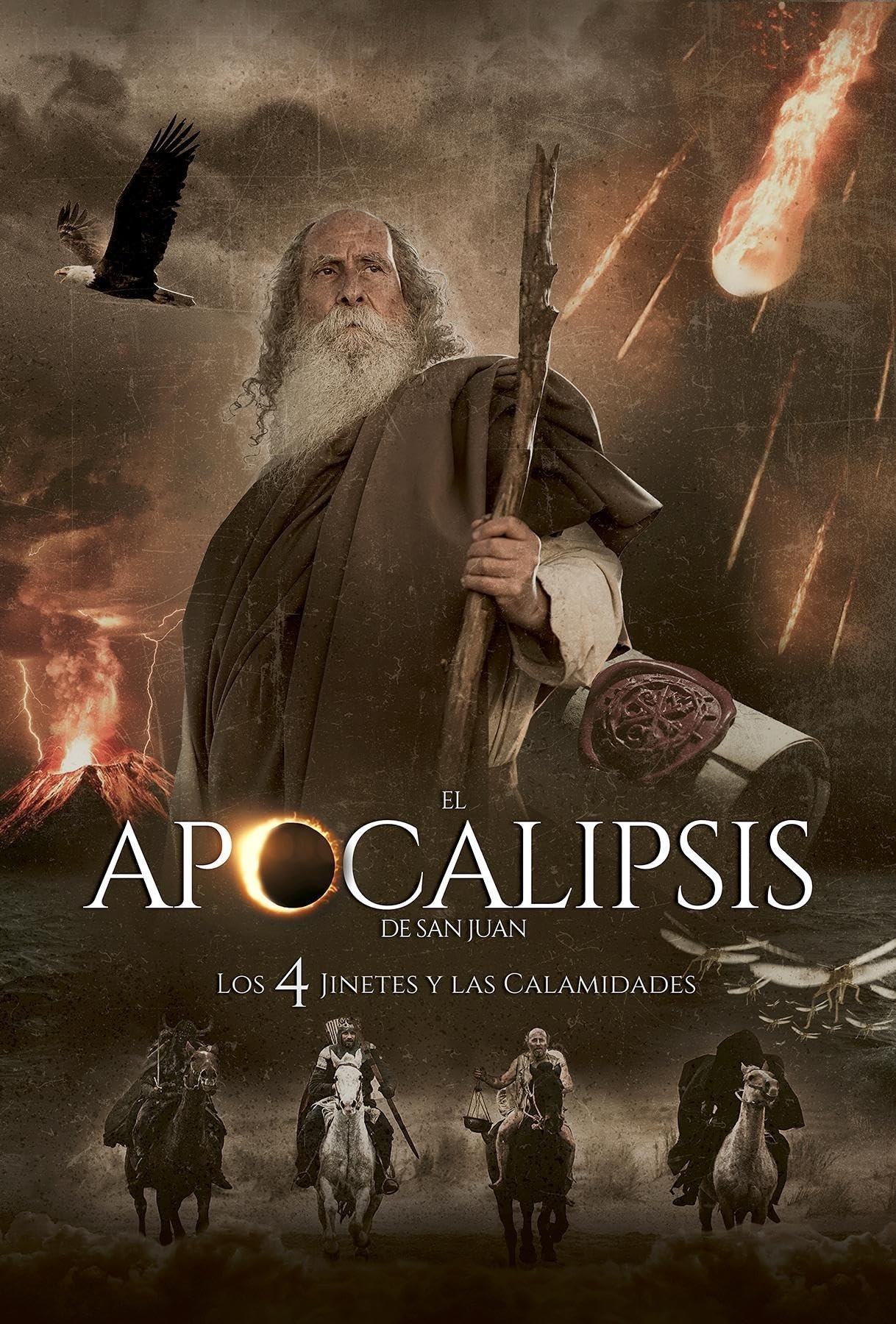
The Apocalypse of St John 2024
Documentary
Embark on an epic journey through time and faith with 'The Apocalypse of Saint John.' Join the Apostle John in a stunning visual narrative that unravels the visions of the End Times. Experience each vision like never before, with striking visual effects and epic scenes that immerse you in the apocalyptic narrative.
The sides of The Apocalypse of St John
- The Apostle John's visions of the end times
- The Book of Revelation staged scene by scene
- Visual effects for the apocalypse
Good for you if
- you like the visions of the Book of Revelation brought to the screen with effects.
- you want the end of the world played out as a vast vision in epic scenes.
Bad for you if
- you need characters to get to know. John is the witness of the visions, not the subject of a portrait.
- you roll your eyes at a solemn, faith-driven telling.
About: faith · the end of the world

The Story of God with Morgan Freeman 2016
Documentary
Morgan Freeman presents his quest in order to find how most religions perceive life after death, what different civilizations thought about the act of creation and other big questions that mankind has continuously asked.
The sides of The Story of God with Morgan Freeman
- Morgan Freeman traveling to holy places
- How religions see death and creation
- Conversations with believers and scholars
Good for you if
- you like big questions about creation and life after death.
- you like learning how ancient civilizations imagined their gods.
- you like meeting believers of many faiths around the world.
Bad for you if
- you need momentum, and a reflective travel documentary feels slow to you.
- you roll your eyes at sincere talk about faith and meaning.
About: faith · death · creation · meaning
Pray Away 2021
Documentary
In the 1970s, five men struggling with being gay in their Evangelical church started a bible study to help each other leave the "homosexual lifestyle." They quickly received over 25,000 letters from people asking for help and formalized as Exodus International, the largest and most controversial conversion therapy organization in the world. But leaders struggled with a secret: their own “same-sex attractions” never went away. After years as Christian superstars in the religious right, many of these men and women have come out as LGBTQ, disavowing the very movement they helped start. Focusing on the dramatic journeys of former conversion therapy leaders, current members, and a survivor, PRAY AWAY chronicles the “ex gay" movement’s rise to power, persistent influence, and the profound harm it causes.
The sides of Pray Away
- Former leaders of the ex-gay movement
- Exodus International and its letters
- A survivor of conversion therapy
Good for you if
- you want the true story of conversion therapy told by those who led it.
- you like seeing how a church movement gained political weight.
- you like hearing people face the harm they caused.
Bad for you if
- you can't watch stories of shame, self-harm and religious pressure.
- you roll your eyes at tearful, heartfelt confessions to camera.
About: faith · identity · guilt
Salesman 1969
Documentary
This documentary from Albert and David Maysles follows the bitter rivalry of four door-to-door salesmen working for the Mid-American Bible Company: Paul "The Badger" Brennan, Charles "The Gipper" McDevitt, James "The Rabbit" Baker and Raymond "The Bull" Martos. Times are tough for this hard-living quartet, who spend their days traveling through small-town America, trying their best to peddle gold-leaf Bibles to an apathetic crowd of lower-middle-class housewives and elderly couples.
The sides of Salesman
- Four Bible salesmen on the road
- Sales pitches in working-class living rooms
- Motel rooms between visits
Good for you if
- you like watching real door-to-door salesmen at work in 1960s America.
- you like following Paul Brennan as his pitch stops working.
- you enjoy black and white documentaries from the sixties.
Bad for you if
- you need more happening than sales pitches in living rooms.
- you need music to carry a film. There's no score and no narrator, just the salesmen talking.
About: work · failure · the American dream
Hail Satan? 2019
Documentary
The story of The Satanic Temple, a controversial movement that combines religion and activism with the apparent purpose of questioning the basic foundations of US society.
The sides of Hail Satan?
- The Satanic Temple and its members
- A goat-headed statue at a state capitol
- Fights over religion in public life
Good for you if
- you want to meet the real people behind a movement that sounds like a joke.
- you like activists using Satan to make a serious point with a grin.
- you like a film about religion, the law and who gets a say.
Bad for you if
- you'd rather not see black masses and Baphomet statues.
- you want devil-worship horror, and this is about lawsuits and town councils.
About: religious freedom · activism · belonging

A 1998
Documentary
Roughly chronological, from 3/96 to 11/96, with a coda in spring of 1997: inside compounds of Aum Shinrikyo, a Buddhist sect led by Shoko Asahara. (Members confessed to a murderous sarin attack in the Tokyo subway in 1995.) We see what they eat, where they sleep, and how they respond to media scrutiny, on-going trials, the shrinking of their fortunes, and the criticism of society. Central focus is placed on Hiroshi Araki, a young man who finds himself elevated to chief spokesman for Aum after its leaders are arrested. Araki faces extreme hostility from the Japanese public, who find it hard to believe that most followers of the cult had no idea of the attacks and even harder to understand why these followers remain devoted to the religion, if not the violence.
The sides of A
- Inside the Aum Shinrikyo compounds after the sarin attack
- A young spokesman facing a hostile press
- Followers who stayed with the faith
Good for you if
- you want to see the Aum sect from inside, a year after the Tokyo subway attack.
- you like a film that refuses to tell you what to think of the people it films.
- you can sit with long, quiet scenes of daily life in a compound.
Bad for you if
- you won't read subtitles for over two hours.
- you find 136 minutes of quiet observation too long.
About: faith · the media · guilt
I Am Not Your Negro 2017
Documentary
Working from the text of James Baldwin’s unfinished final novel, director Raoul Peck creates a meditation on what it means to be Black in the United States.
The sides of I Am Not Your Negro
- James Baldwin's unfinished book
- Medgar Evers, Malcolm X and Martin Luther King
- Archive footage of America then and now
Good for you if
- you want Medgar Evers, Malcolm X and Martin Luther King through James Baldwin's eyes.
- you want the real archive footage of the civil rights years.
- you like James Baldwin's words, read by Samuel L. Jackson.
Bad for you if
- you can't watch archive images of racist violence.
- you need a story that moves faster than an essay.
About: racism · memory · American identity
Disclosure 2020
Documentary
An investigation of how Hollywood's fabled stories have deeply influenced how Americans feel about transgender people, and how transgender people have been taught to feel about themselves.
The sides of Disclosure
- Trans actors and writers talking about the screen
- Decades of film and TV clips
- How Hollywood shaped the way people see trans lives
Good for you if
- you want trans people telling their own story of growing up with Hollywood.
- you like tracing a century of film and TV images.
- you like being moved by people recalling what the screen did to them.
Bad for you if
- you can't sit through cruel jokes and painful scenes being replayed.
- you'd rather keep your distance from heartfelt, personal testimony.
About: representation · identity · media
Going Clear: Scientology and the Prison of Belief 2015
Documentary
The film profiles eight former members of the Church of Scientology, shining a light on how they attract true believers and the things they do in the name of religion.
The sides of Going Clear: Scientology and the Prison of Belief
- Eight former members of the Church of Scientology
- How a science fiction writer founded a religion
- Testimony about abuse inside the church
Good for you if
- you like hearing people explain how they came to believe, and how they left.
- you want to know how an organisation keeps control of its members.
- you like long testimonies where people choose every word.
Bad for you if
- you can't listen to accounts of psychological abuse and broken families.
- you lose track when names pile up. Eight former members, two church leaders and a few film stars come and go.
About: belief · control · leaving
Religulous 2008
Documentary
Commentator-comic Bill Maher plays devil's advocate with religion as he talks to believers about their faith. Traveling around the world, Maher examines the tenets of Christianity, Judaism and Islam and raises questions about homosexuality, proof of Christ's existence, Jewish Sabbath laws, violent Muslim extremists.
The sides of Religulous
- A comedian interviewing believers of several faiths
- A chapel for truckers and a creationism museum
- A visit to a rabbi and to a Vatican priest
Good for you if
- you laugh when an interviewer keeps a straight face and lets an answer hang.
- you like watching someone argue for an hour and a half.
- you like real people filmed in their own churches and shops.
Bad for you if
- you want believers taken at their word, not set up for a laugh.
- you want a calm evening, and this is a dispute in almost every scene.
About: faith · doubt · religion
The Unbelievers 2013
Documentary
Scientists Richard Dawkins and Lawrence Krauss travel the globe promoting a scientific worldview and the rational questioning of religious belief.
The sides of The Unbelievers
- Richard Dawkins and Lawrence Krauss on tour
- Science against religious belief
- Packed halls and debates around the world
Good for you if
- you like long conversations about science and belief.
- you want arguments built on evidence.
- you like spending time on the road with two well-known scientists.
Bad for you if
- you roll your eyes at people making the case for their own side on stage.
- you want a portrait of the men themselves. The film follows their talks more than their lives.
About: reason · religion · doubt
Jonestown: The Life and Death of Peoples Temple 2006
Documentary
Featuring never-before-seen footage, this documentary delivers a startling new look at the Peoples Temple, headed by preacher Jim Jones who, in 1978, led more than 900 members to Guyana, where he orchestrated a mass suicide via tainted punch.
The sides of Jonestown: The Life and Death of Peoples Temple
- Jim Jones and the Peoples Temple
- Former members and survivors speaking
- The move to Guyana in 1978
Good for you if
- you want to understand how ordinary people followed Jim Jones.
- you like archive footage that shows a story from the inside.
- you can watch a slow descent you know will end in tragedy.
Bad for you if
- you can't face the deaths of more than 900 people, children among them.
- you need some hope at the end of a story.
About: faith · manipulation · belonging
Shoah 1985
Documentary
Director Claude Lanzmann spent 11 years on this sprawling documentary about the Holocaust, conducting his own interviews and refusing to use a single frame of archival footage. Dividing Holocaust witnesses into three categories – survivors, bystanders, and perpetrators – Lanzmann presents testimonies from survivors of the Chelmno concentration camp, an Auschwitz escapee, and witnesses of the Warsaw Ghetto Uprising, as well as a chilling report of gas chambers from an SS officer at Treblinka.
The sides of Shoah
- Survivors, bystanders and perpetrators interviewed
- The sites of the camps filmed decades later
- No archive footage at all
Good for you if
- you want the Holocaust told by those who were there.
- you can sit with long silences and slow train journeys.
- you can be moved to tears by a barber breaking down as he recalls Treblinka.
Bad for you if
- you can't give more than nine hours to one film.
- you won't read subtitles, and the film moves between many languages.
- you can't hear first-hand accounts of mass murder.
About: memory · testimony · genocide
The Celluloid Closet 1996
Documentary
Exuberant, eye-opening movie that serves up a dazzling hundred-year history of the role of gay men and lesbians have had on the silver screen. Film contains fabulous footage from 120 films showing the changing face of cinema sexuality, from cruel stereotypes to covert love to the activist triumphs of the 1990s.
The sides of The Celluloid Closet
- A hundred years of gay characters on screen
- Clips from more than a hundred Hollywood films
- Actors and writers looking back
Good for you if
- you like seeing a century of Hollywood through one lens.
- you want actors and writers telling what was hidden in plain sight.
- you love classic Hollywood clips and the subtext between the lines.
Bad for you if
- you lose track when clips from over a hundred films go by one after another.
- you'd rather not revisit decades of gay characters mocked or killed off.
About: representation · censorship · identity
The Devil and Father Amorth 2018
Documentary
William Friedkin attends an exorcism with Father Gabriele Amorth, as he treats an Italian woman named Cristina for the ninth time. Prior to filming, Cristina had purportedly been experiencing behavioural changes and “fits” that could not be explained by psychiatry, and which became worse during Christian holidays.
The sides of The Devil and Father Amorth
- William Friedkin filming a real exorcism
- Father Amorth, Rome's chief exorcist
- A woman named Cristina on her ninth exorcism
Good for you if
- you like a chill from footage that claims to be real.
- you're curious what the director of The Exorcist saw at a real one.
- you're drawn to possession, faith and what psychiatry can't explain.
Bad for you if
- you need proof, and a filmed exorcism won't convince you.
- you want the effects of The Exorcist, not a small camera in a room.
About: faith · evil · doubt

Seven Deadly Sins 2008
Documentary
The series traces the history of the seven deadly sins, how they became part of religious doctrine, and looks at historical figures who have been the worst perpetrators of each. Each of the seven sins is explored, from their origins and nature, their opposing virtue, and their corresponding punishment.
The sides of Seven Deadly Sins
- Seven sins traced back to their origin
- Historical figures held up as examples
- The virtue set against each sin
Good for you if
- you like a walk through medieval doctrine and the figures the church pointed at.
- you want real historical cases rather than a fiction about greed.
Bad for you if
- you need momentum and this one takes its time with each sin.
- you want people to follow, not a subject explained sin by sin.
About: guilt · religion · history
Zeitgeist: The Movie 2007
Documentary
A documentary examining possible historical and modern conspiracies surrounding Christianity, the 9/11 terrorist attacks, and the Federal Reserve bank.
The sides of Zeitgeist: The Movie
- A claim that the Jesus story comes from sun myths
- An argument about what happened on 9/11
- A history of the Federal Reserve and the dollar
Good for you if
- you like a film that goes after banks, churches and governments at once.
- you like archive footage and narration built into an argument.
- you want a film about the real world rather than a story.
Bad for you if
- you need the claims to hold up when you check them.
- you can't sit through two hours of voice-over and archive footage in one evening.
About: belief · money · power
Jesus Camp 2006
Documentary
A documentary on kids who attend a summer camp hoping to become the next Billy Graham.
The sides of Jesus Camp
- Children at an evangelical summer camp
- A pastor preparing kids for a life of faith
- Faith and public life in America
Good for you if
- you like a documentary that watches and lets you decide.
- you want to see faith through the eyes of children.
- you're curious how belief and public life meet in America.
Bad for you if
- you can't watch children under strong emotional pressure.
- you can't stand long, fervent sermons.
About: faith · childhood · transmission
The Look of Silence 2014
Documentary
An Indonesian man with a communist background named Ramli was brutally murdered when the "Communist" purge occurred in 1965. His remaining family members lived in fear and silence until the making of this documentary. Adi, a brother of his, decided to revisit the horrific incident and visited the men who were responsible for the killings and one survivor of the purge. These meetings uncovered sadistic details of the murders and exposed raw emotions and reactions of the killers' family members about what happened in the past - much to Adi's disappointment.
The sides of The Look of Silence
- A man facing those who killed his brother
- Eye tests as a way into conversations
- Indonesia's 1965 killings
Good for you if
- you want to see a family ask the questions it was never allowed to ask.
- you want to understand a mass killing that is rarely talked about.
- you like quiet, patient conversations that say a lot.
Bad for you if
- you can't bear to hear killers calmly describe what they did.
- you won't read subtitles for a film in Indonesian.
About: guilt · memory · justice · grief
The Fog of War 2003
Documentary
Former corporate whiz kid Robert McNamara was the controversial Secretary of Defense in the Kennedy and Johnson administrations, during the height of the Vietnam War. Augmented by archival footage and cabinet conversation recordings, Errol Morris gives the conflicted McNamara a platform on which he attempts to confront his and the U.S. government's actions in Southeast Asia in light of the horrors of modern warfare, the end of ideology and the punitive judgment of history.
The sides of The Fog of War
- Robert McNamara looking back at his life
- The Cuban missile crisis and Vietnam
- White House recordings
Good for you if
- you like hearing a man in power explain his own decisions.
- you want the Cold War told from inside the room.
- you want to think about how wars are decided and why they go wrong.
Bad for you if
- you want a clear verdict on McNamara, and the film leaves you to judge him.
- you need momentum, and this is one man talking to the camera.
About: responsibility · war · memory · power